Quick Answer: "Win property management HVAC contracts by choosing the portfolios you can serve well, proving your commercial capabilities, responding reliably, and making vendor approval easy. Build relationships before emergencies, offer a clear maintenance path, and follow every conversation until there is a defined next step, future date, or firm no."
A focused commercial HVAC marketing system should help property managers find you, understand your fit, and trust that your team can support their properties. The contract is usually won through operational credibility and consistent follow-up, not a clever sales line.
Property managers carry risk across tenants, owners, budgets, vendors, and multiple locations. Your job is to show that working with your company will make the HVAC part of that responsibility easier to manage.
Understand What the Property Manager Is Buying
A property manager is not only buying repairs. They are buying response, communication, documentation, budget predictability, and fewer surprises. The technical result matters, but so does what happens before the technician arrives and after the work is complete.
Different portfolios need different support. Retail centers may need after-hours coordination and tenant communication. Office properties may care about comfort complaints, reporting, and planned work. Industrial sites may require safety procedures, specialized systems, and tighter scheduling. Do not approach every property manager with the same generic capability statement.
Choose the Accounts Your Operation Can Serve
Define the property types, locations, equipment, service level, and portfolio size that fit your team. A smaller contractor may be excellent for a concentrated local portfolio but struggle with scattered multi-state coverage. A company with strong RTU experience should not lead with chiller capabilities it rarely delivers.
Create a target-account list based on fit, not just company size. Record the decision-maker, portfolio, current vendor situation when known, contract timing, relevant service needs, and the next reason to make contact.
Make Vendor Approval Easy
| Property manager concern | Proof to provide |
|---|---|
| Can you cover our properties? | Accurate service area, hours, dispatch process, and escalation contact |
| Can you work on our equipment? | System capabilities, technician experience, and relevant examples |
| Will you communicate clearly? | Defined updates, service notes, photos, estimates, and account ownership |
| Are you ready for procurement? | Licenses, insurance, tax forms, safety information, and references |
| Can you help control cost? | Maintenance options, repair-versus-replace guidance, and planned recommendations |
Build a vendor packet before you need it. Keep insurance documents, licenses, references, safety information, service coverage, contact details, and company capabilities current. Fast paperwork can separate a prepared contractor from a slow one when a manager needs help.
Build Relationships Before the Emergency
Emergency calls can open doors, but a relationship built only during failures is fragile. Reach out with a specific and useful reason. You might offer a portfolio equipment review, discuss recurring rooftop-unit problems, share a seasonal readiness checklist, or explain how you handle after-hours escalation.
Keep the message short and relevant to the portfolio. Do not send a long list of every service the company has ever performed. State who you serve, the problems you handle well, the coverage you offer, and a practical next step.
Use Search and Your Website to Support Outreach
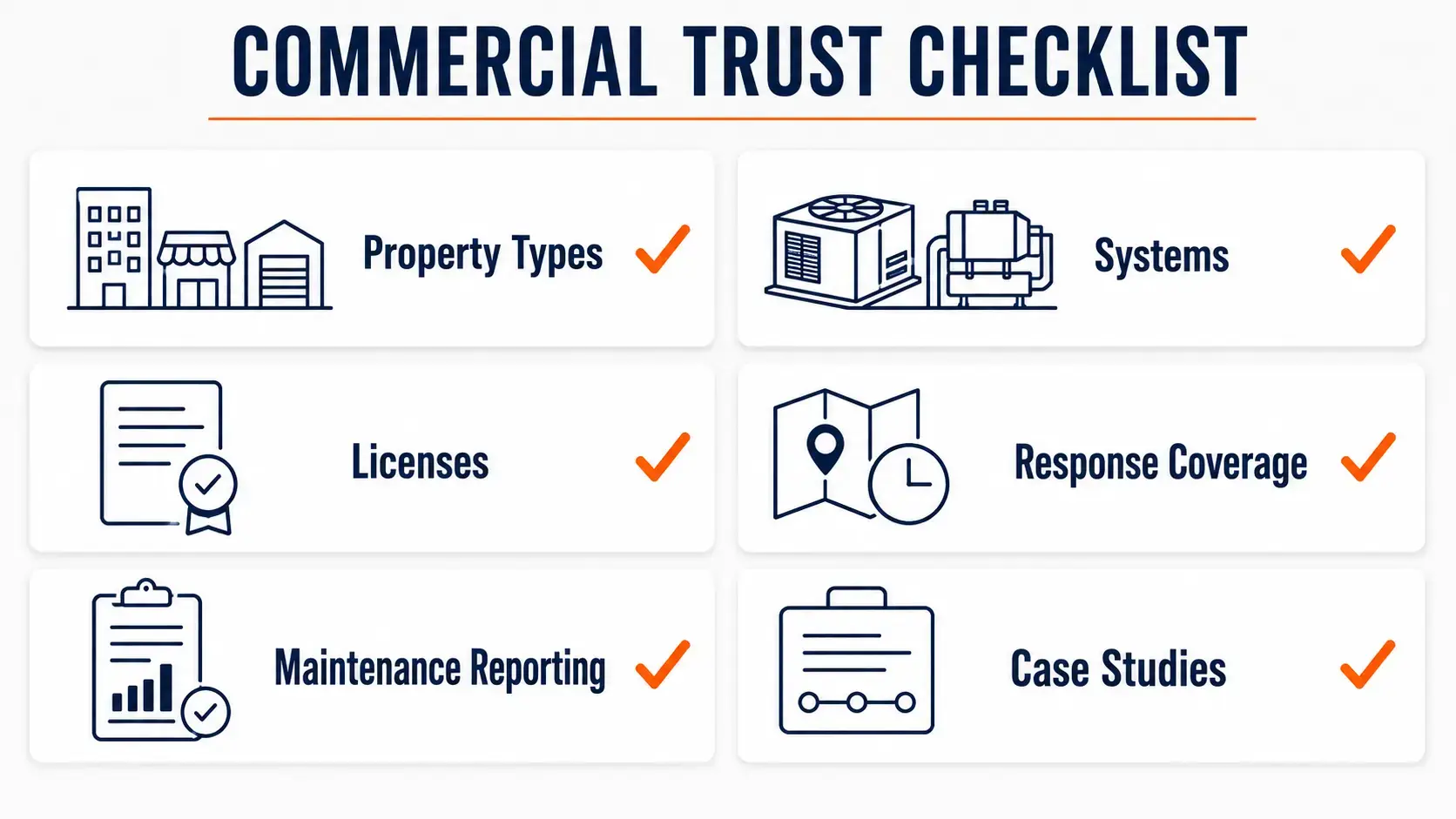
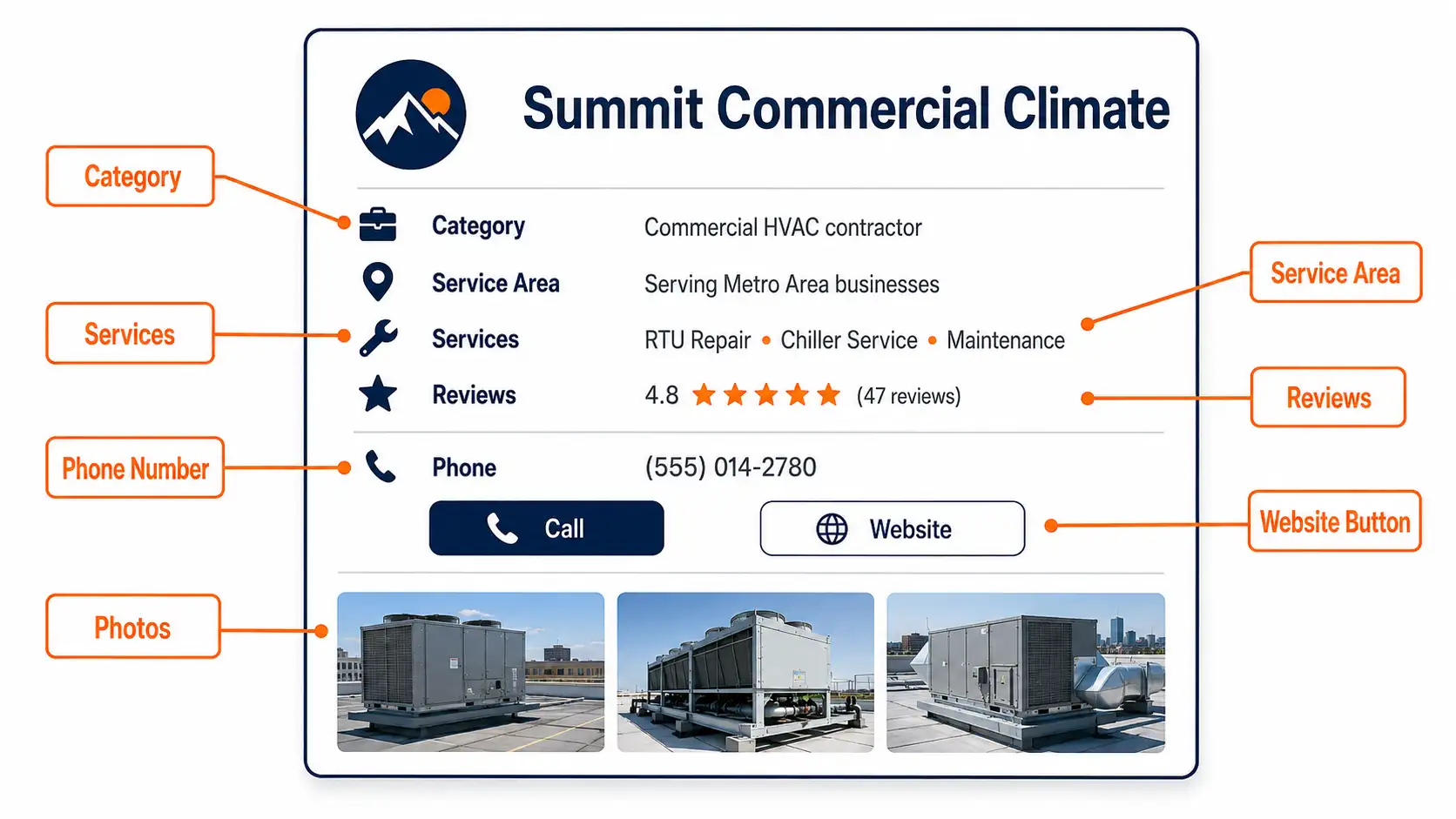
Property managers will often look up the company after a referral or outreach message. The website should confirm the claims made in the conversation. Include commercial service pages, property types, service area, response process, systems, licenses, reviews, case examples, and easy contact options.
Search visibility also creates inbound opportunities when a manager actively needs a contractor. Pages for commercial service, rooftop units, maintenance agreements, and relevant markets should be clear enough to answer whether the company belongs on the call list.
Turn the First Job Into a Contract Conversation
A completed service call creates evidence. Use it. Deliver clear notes, photos where appropriate, recommended next actions, and a professional invoice. Follow up with the person who requested the work and ask whether other properties or recurring issues need attention.
Do not force a maintenance pitch before the immediate problem is handled. Once the manager sees the quality of the service and communication, explain the operational value of a planned approach: asset visibility, scheduled visits, documented findings, fewer avoidable failures, and a clearer renewal process.
Offer Maintenance in a Way That Fits the Portfolio
A maintenance proposal should be specific. List covered locations and equipment, visit frequency, planned tasks, reporting, exclusions, response expectations, pricing, renewal terms, and the process for recommendations outside the agreement.
The commercial HVAC maintenance agreement growth process should continue after the proposal. Track open discussions, decision dates, renewal windows, delayed budgets, and the reasons an agreement was won or lost.
Follow the Procurement Calendar
Many commercial opportunities do not move on your preferred timeline. The current vendor may have months left on a contract. A budget may reopen next quarter. Ownership may require multiple bids. Record the real timing and follow up when the next decision becomes possible.
A useful follow-up references the property or previous conversation. Share a relevant checklist, confirm a renewal window, ask whether scope has changed, or offer to review an upcoming project. Repeated “just checking in” messages add little value.
A 60-Day Property Manager Outreach Plan
Weeks 1–2: Define and prepare
Choose the property types and markets, build the target list, update the commercial pages, prepare the vendor packet, and create two short outreach messages.
Weeks 3–4: Start conversations
Ask strong customers and trade partners for introductions. Contact target managers with a relevant reason. Track replies, property needs, incumbent timing, and next actions.
Weeks 5–8: Build proof and follow-up
Complete site visits or initial jobs professionally, collect permission to use relevant proof, present clear maintenance options, and schedule follow-up around the buyer’s actual timeline.
Write Proposals for Operations, Not Just Price
A commercial proposal should make the scope easy to evaluate. Identify the property and equipment, describe included work, clarify assumptions and exclusions, state the schedule or response expectation, and explain what happens after approval. When alternatives exist, separate them clearly instead of burying the decision in technical language.
Give the manager a concise version that can be shared with an owner or internal approver. The proposal still needs technical accuracy, but it should also explain operational impact, risk, timing, and the consequence of delaying the work. A defined follow-up date prevents the estimate from disappearing into an inbox.
Protect the Relationship After the Contract Is Won
The first 90 days shape renewal probability. Assign an account contact, confirm covered properties and equipment, document communication preferences, schedule planned visits, and explain how emergency and out-of-scope work will be handled. Review early service notes for patterns that deserve a proactive conversation.
Use regular account reviews for larger portfolios. Summarize completed work, open recommendations, recurring failures, budget risks, and upcoming needs. This turns maintenance reporting into a management tool and gives the contractor a stronger position when the agreement approaches renewal.
Frequently Asked Questions
How do I find property managers who need HVAC contractors?
Build a focused list from the markets and property types you serve, then combine referrals, local associations, property records, portfolio research, and high-intent search visibility. Contact the right role with a specific reason the relationship could be useful.
What do property managers look for in an HVAC vendor?
They commonly evaluate service coverage, response reliability, equipment capabilities, insurance and licensing, communication, documentation, billing process, references, and the ability to support multiple properties or stakeholders.
Should I offer a free HVAC inspection to property managers?
A limited walkthrough or portfolio review can open a useful conversation when the scope is clear. Avoid an open-ended promise that consumes technical time without a qualified opportunity or agreed next step.
How long does it take to win a commercial HVAC contract?
The timing varies. An urgent service need may create an immediate opening, while a preferred-vendor or maintenance relationship can take months because of budget cycles, incumbent contracts, approvals, and procurement requirements.
What should be included in a commercial HVAC maintenance proposal?
Include covered equipment and locations, visit frequency, planned tasks, exclusions, reporting, response expectations, pricing, renewal terms, responsibilities, and a clear process for repairs or work outside the agreement.
Find the Gaps That Keep Good Accounts From Moving
If visibility, proof, response, proposals, and follow-up are disconnected, strong property accounts will stall. Request a Commercial HVAC Revenue Leak Audit to see where the path from first contact to recurring contract is breaking down.