
Quick Answer: "Market a commercial HVAC company in Sarasota by building strong service and market pages, optimizing the Google Business Profile, earning credible local reviews, targeting high-intent searches, and responding to every lead quickly. Measure results across Sarasota, Bradenton, Lakewood Ranch, Venice, and North Port by qualified opportunities and booked revenue."
A practical HVAC local SEO strategy should reflect how the company actually serves Sarasota and Southwest Florida. The goal is not to repeat city names. It is to make services, coverage, proof, and contact paths clear to local commercial buyers.
Sarasota-area HVAC demand includes offices, retail, restaurants, medical facilities, multifamily properties, schools, industrial sites, hospitality, and growing mixed-use communities. Choose the property types and systems that fit your operation, then build marketing around that real capability.
Position the Company for Commercial Buyers
Many HVAC websites make commercial work hard to find. The homepage may use residential images, consumer financing messages, and a general list of services. A property manager or facility team should be able to identify the commercial fit immediately.
State the commercial services, equipment or system capabilities, property types, service area, hours or response process, and the next step. Use proof that matters locally: licenses, relevant reviews, project or maintenance examples, team experience, and the ability to support the stated coverage area.
Build a Sarasota-Area Page Structure That Helps Buyers
Start with a strong commercial overview and focused pages for priority services. Add market pages when the location has enough value to deserve distinct information.
| Market | Useful local angle |
|---|---|
| Sarasota | Core commercial services, property mix, coverage, and local proof |
| Bradenton | Actual service coverage, commercial corridors, and relevant capabilities |
| Lakewood Ranch | Growing offices, retail, medical, multifamily, and planned properties |
| Venice | Coverage boundaries, response expectations, and property needs |
| North Port | Service fit, travel and dispatch reality, and commercial growth |
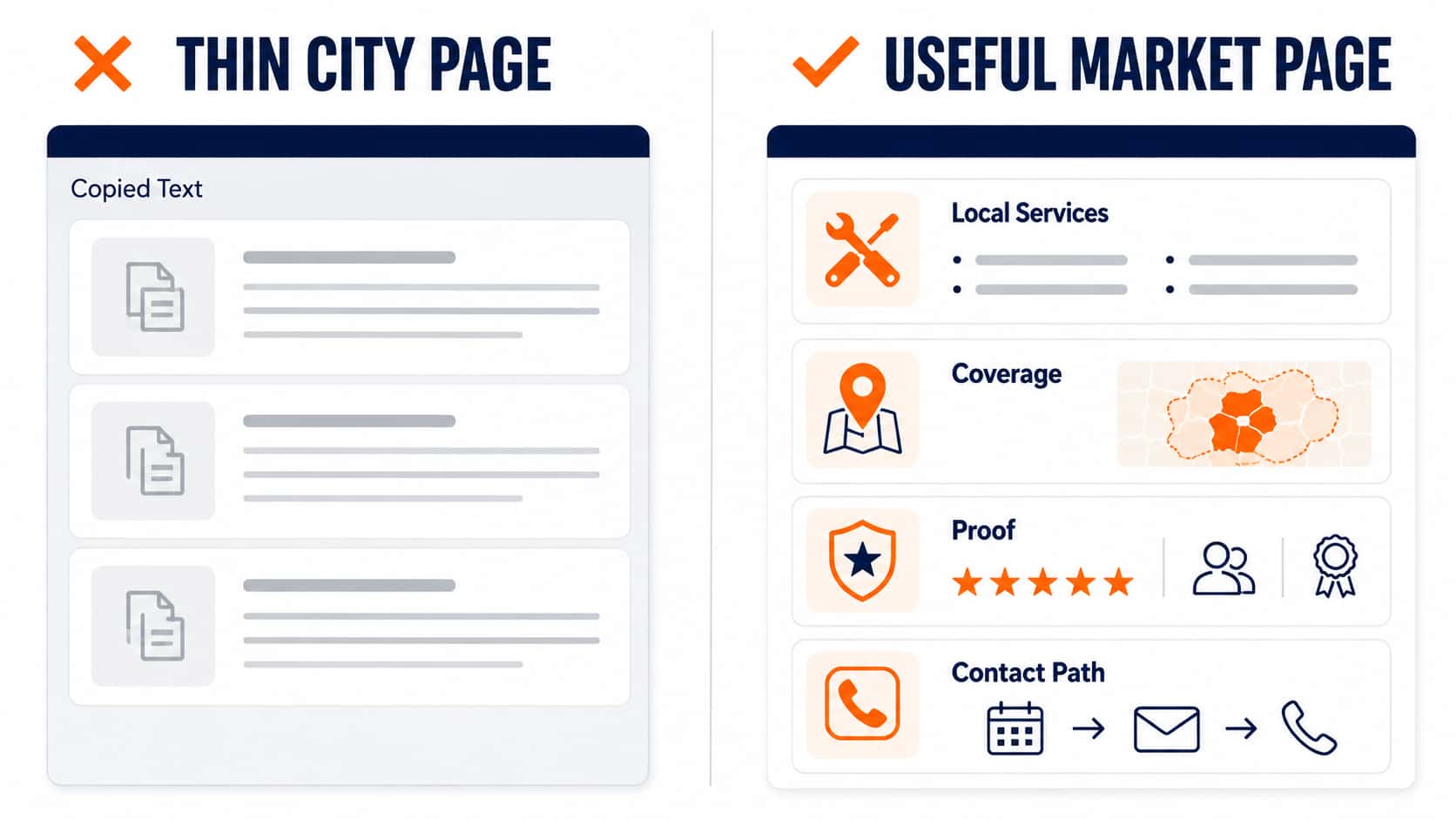
Do not publish five nearly identical pages. Add location-specific service detail, proof, common property needs, coverage information, and a meaningful contact path. If there is not enough distinct value yet, use one strong Southwest Florida page and expand later.
Optimize the Google Business Profile Carefully
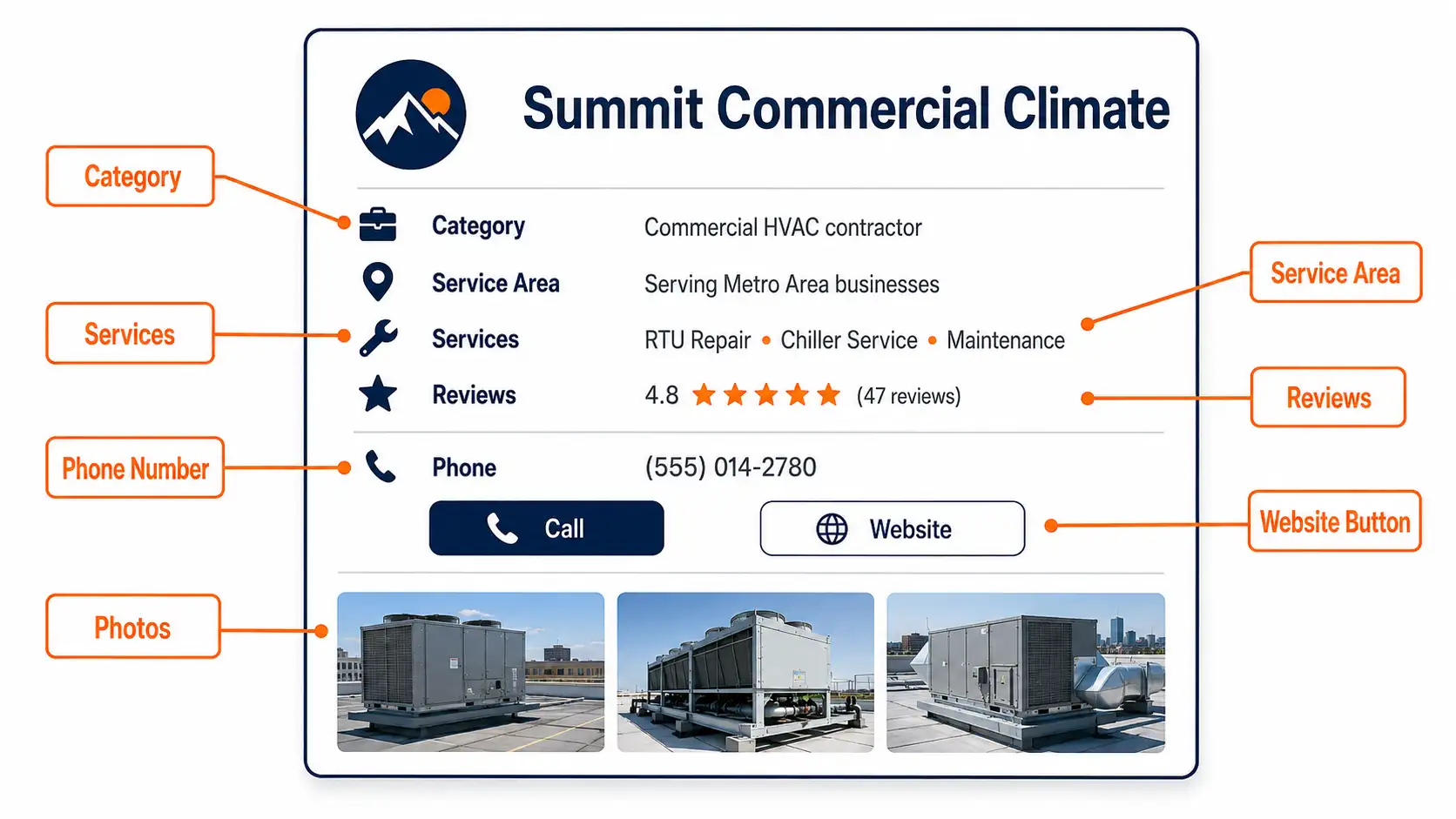
Use the real business name, eligible address or service-area setup, accurate primary and secondary categories, current hours, phone number, website, services, photos, and business description. Do not create extra profiles or virtual locations only to reach more map areas.
Add commercial service information without implying capabilities the company does not offer. Upload real team, vehicle, equipment, and project photos when permission allows. Keep the profile active with useful updates, but treat posts as support for the profile rather than a substitute for strong services, reviews, and website pages.
Build a Review Process Into the Customer Journey
Ask for reviews after a successful service moment, not through a random annual blast. Trigger a polite email or text after the job is complete and the customer has had a chance to confirm the result. Make the request simple and do not offer incentives for positive reviews.
Monitor new reviews, respond professionally, and route negative feedback for human follow-up. Reviews support trust, but the operational lesson is equally valuable. Repeated comments about response, communication, or billing should inform the customer process.
Create Service Pages for High-Intent Local Searches
A commercial buyer may search for rooftop-unit repair, preventive maintenance, replacement, controls, refrigeration, or a contractor for property managers. Build pages only for services the company genuinely performs. Each page should explain the problem, systems, property fit, service process, coverage, proof, and next step.
Use Sarasota and nearby market language naturally where it helps the buyer. Do not force every city into every heading. Internal links should connect the commercial overview, priority services, relevant market pages, proof, and contact options.
Use Google Ads for Immediate High-Intent Demand
Paid search can put the company in front of buyers who need help now, but targeting must be controlled. Separate commercial and residential intent, use negative keywords, restrict geography, choose priority services, and send each campaign to a focused page.
A well-built HVAC Google Ads program connects the search term with the landing page, tracked call or form, qualification, estimate, and booked work. Review actual search terms and call outcomes before increasing budget.
Support Longer Commercial Buying Cycles
Not every Sarasota commercial lead is an emergency. Property managers may be replacing a vendor, planning a budget, collecting bids, or evaluating maintenance options. Record the decision window and next action instead of marking every delayed opportunity as lost.
Use helpful follow-up: a maintenance scope, seasonal planning checklist, equipment review, proposal clarification, or reminder near the stated budget date. Continue until there is a decision or a documented nurture date.
Track the Full Local Revenue Path
Use source-level call tracking and hidden form fields where appropriate. Record the buyer, property, market, service, qualification, estimate, next action, status, revenue, and maintenance value. Compare Sarasota, Bradenton, Lakewood Ranch, Venice, and North Port only when the volume is large enough to support a useful conclusion.
Do not judge a channel by rankings, map views, or calls alone. The local marketing scorecard should show qualified opportunities, cost per booked job, gross profit, and recurring revenue.
A 90-Day Sarasota HVAC Marketing Plan
Days 1–30: Correct the foundation
Confirm positioning, service area, priority commercial services, Google Business Profile accuracy, reviews, calls, forms, tracking, and response ownership.
Days 31–60: Strengthen local demand
Improve the commercial and service pages, add useful Sarasota-area detail, publish one buyer-focused resource, request reviews after successful jobs, and launch tightly controlled paid campaigns if capacity allows.
Days 61–90: Follow opportunities and reallocate
Review qualified leads, estimates, booked work, market fit, search terms, missed calls, and proposal follow-up. Move effort toward the services and locations creating profitable opportunities.
Build Local Authority Beyond the Website
Strong local marketing includes real relationships. Build connections with property managers, commercial real estate professionals, general contractors, facility groups, trade partners, manufacturers, and local business organizations that overlap with the properties you serve. The goal is not mass networking. It is a smaller group of credible relationships that can create introductions and market knowledge.
Support those relationships with useful information. A seasonal readiness checklist, equipment planning note, or maintenance reporting example gives partners something practical to share. Record the referral source and thank the person who made the introduction.
Publish Content That Matches Sarasota Buyer Questions
Use real questions from sales calls, service conversations, estimates, and customer emails. Topics may cover maintenance scope, replacement planning, rooftop-unit problems, indoor comfort, vendor evaluation, emergency response, and budgeting. Answer the question directly, connect it to a relevant service, and avoid padding the article with generic advice.
One strong resource can support search, sales follow-up, email, and social distribution. Review performance by qualified visits, assisted conversions, and use in active opportunities—not only page views.
Frequently Asked Questions
How do I market an HVAC company in Sarasota?
Build clear service and market pages, optimize an eligible Google Business Profile, earn local reviews, run tightly targeted search campaigns when appropriate, and track calls and forms through booked work. Match the message to the services and property types you actually serve.
Should an HVAC company create a page for every Sarasota-area city?
Only create a market page when the company genuinely serves the area and can add useful local information. Avoid copied pages that change only the city name. One strong regional page can support smaller markets until each deserves a distinct resource.
Does Google Business Profile help commercial HVAC companies?
Yes. It can support local discovery, trust, calls, directions, reviews, photos, services, and branded searches. Eligibility, real-world location, relevance, distance, and prominence still affect visibility.
Should Sarasota HVAC companies use Google Ads or SEO?
Most established companies benefit from both when capacity and tracking are ready. Ads can capture immediate demand; SEO and local authority build durable visibility. Allocate budget by qualified opportunities and booked revenue.
How do I know which Sarasota HVAC marketing channel works?
Use source-level call and form tracking, record qualification and service area, carry the source into estimates, and compare channels by cost per qualified opportunity, booked jobs, gross profit, and maintenance value.
Find the Sarasota Growth Leaks Closest to Revenue
More local visibility will not help if calls are missed, pages are unclear, or proposals stall. Request a Commercial HVAC Revenue Leak Audit to identify the practical fixes connecting Sarasota-area demand with booked work.